• The Team
  • The Other City: About
  • Behind Bars Blog
  • The Other City: Working Groups
    • About
    • Key Issues Blog
    • The Papers of Julia Schwendinger and Herman Schwendinger
    • A Note on the Berkeley School of Criminology
    • About the Schwendinger's: From 50 Key Thinkers in Critical Criminology
    • The Obituaries of Hi and Julia
    • Looking Back: Reflecting on The Birth of Radical Criminology at Berkeley
    • The Radical Caucus at the ASA
  • Critical Criminologist Archive
  • Publications
Menu

The Critical Social History Project

BMW, Suite 601
New York City
Phone Number

Your Custom Text Here

The Critical Social History Project

  • The Team
  • The Other City: About
  • Behind Bars Blog
  • The Other City: Working Groups
  • Preserving Justice
    • About
    • Key Issues Blog
  • The Papers of Julia Schwendinger and Herman Schwendinger
    • The Papers of Julia Schwendinger and Herman Schwendinger
    • A Note on the Berkeley School of Criminology
    • About the Schwendinger's: From 50 Key Thinkers in Critical Criminology
    • The Obituaries of Hi and Julia
    • Looking Back: Reflecting on The Birth of Radical Criminology at Berkeley
    • The Radical Caucus at the ASA
  • Critical Criminologist Archive
  • Publications
 This issue includes essays from T.R. Young offers insight into the possible relationship between chaos theory and crime. Kimberley Cook and J.R. Bjerklie discuss the relationship between chaos theory and sociology. Rich Lovell and Carl Pope react to

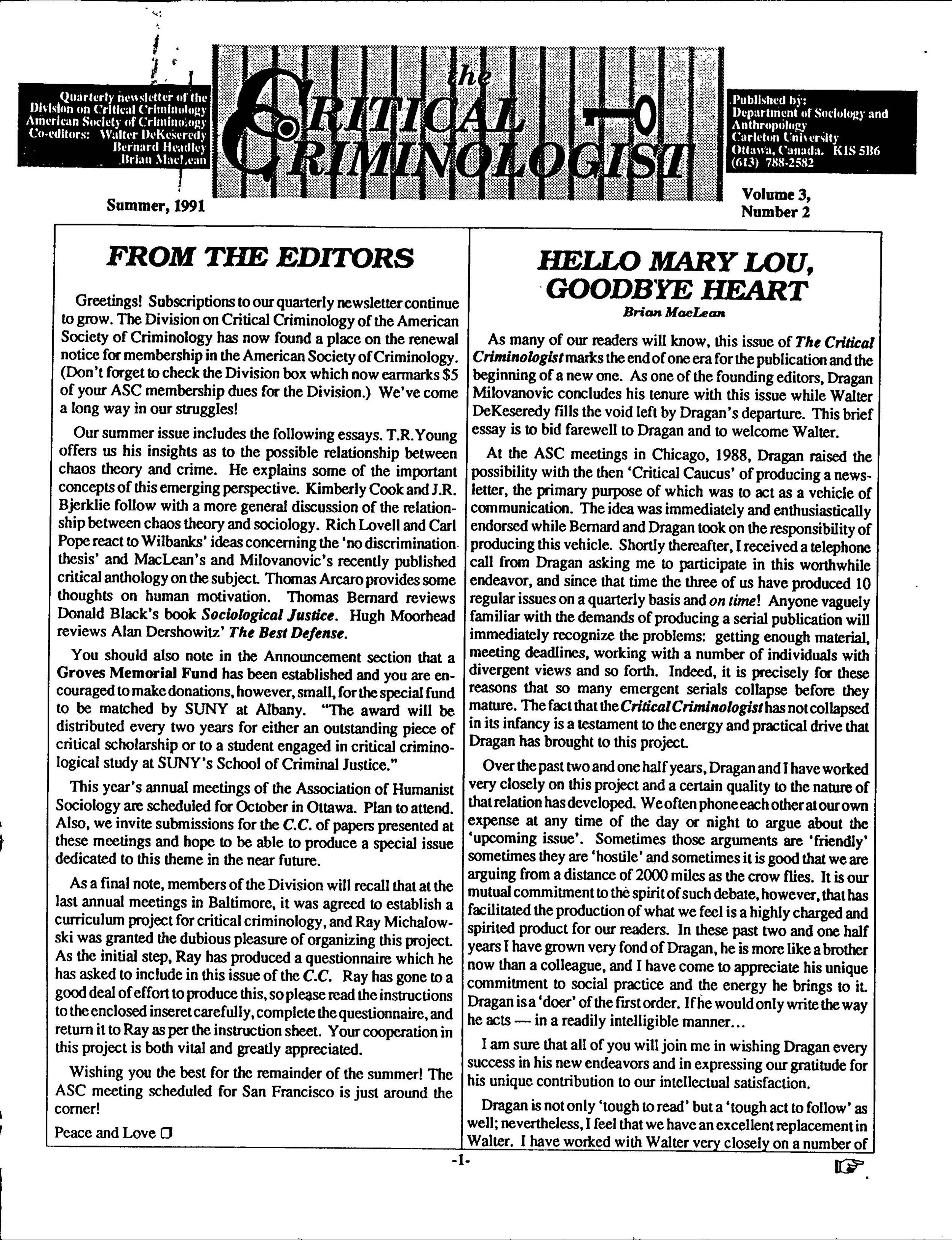
The Critical Criminologist Vol 3 No 2

The Critical Criminologist Vol 3 No 2

 This issue includes essays from T.R. Young offers insight into the possible relationship between chaos theory and crime. Kimberley Cook and J.R. Bjerklie discuss the relationship between chaos theory and sociology. Rich Lovell and Carl Pope react to

This issue includes essays from T.R. Young offers insight into the possible relationship between chaos theory and crime. Kimberley Cook and J.R. Bjerklie discuss the relationship between chaos theory and sociology. Rich Lovell and Carl Pope react to Wilbanks’ ideas concerning the “no discrimination thesis” and MacLean’s ideas concerning the “no discrimination thesis” and MacLean’s and Milovanovic’s recently published critical anthology on the subject. Thomas Arcaro provides some thoughts on human motivation.

Click here for full issue