• The Team
  • The Other City: About
  • Behind Bars Blog
  • The Other City: Working Groups
    • About
    • Key Issues Blog
    • The Papers of Julia Schwendinger and Herman Schwendinger
    • A Note on the Berkeley School of Criminology
    • About the Schwendinger's: From 50 Key Thinkers in Critical Criminology
    • The Obituaries of Hi and Julia
    • Looking Back: Reflecting on The Birth of Radical Criminology at Berkeley
    • The Radical Caucus at the ASA
  • Critical Criminologist Archive
  • Publications
Menu

The Critical Social History Project

BMW, Suite 601
New York City
Phone Number

Your Custom Text Here

The Critical Social History Project

  • The Team
  • The Other City: About
  • Behind Bars Blog
  • The Other City: Working Groups
  • Preserving Justice
    • About
    • Key Issues Blog
  • The Papers of Julia Schwendinger and Herman Schwendinger
    • The Papers of Julia Schwendinger and Herman Schwendinger
    • A Note on the Berkeley School of Criminology
    • About the Schwendinger's: From 50 Key Thinkers in Critical Criminology
    • The Obituaries of Hi and Julia
    • Looking Back: Reflecting on The Birth of Radical Criminology at Berkeley
    • The Radical Caucus at the ASA
  • Critical Criminologist Archive
  • Publications
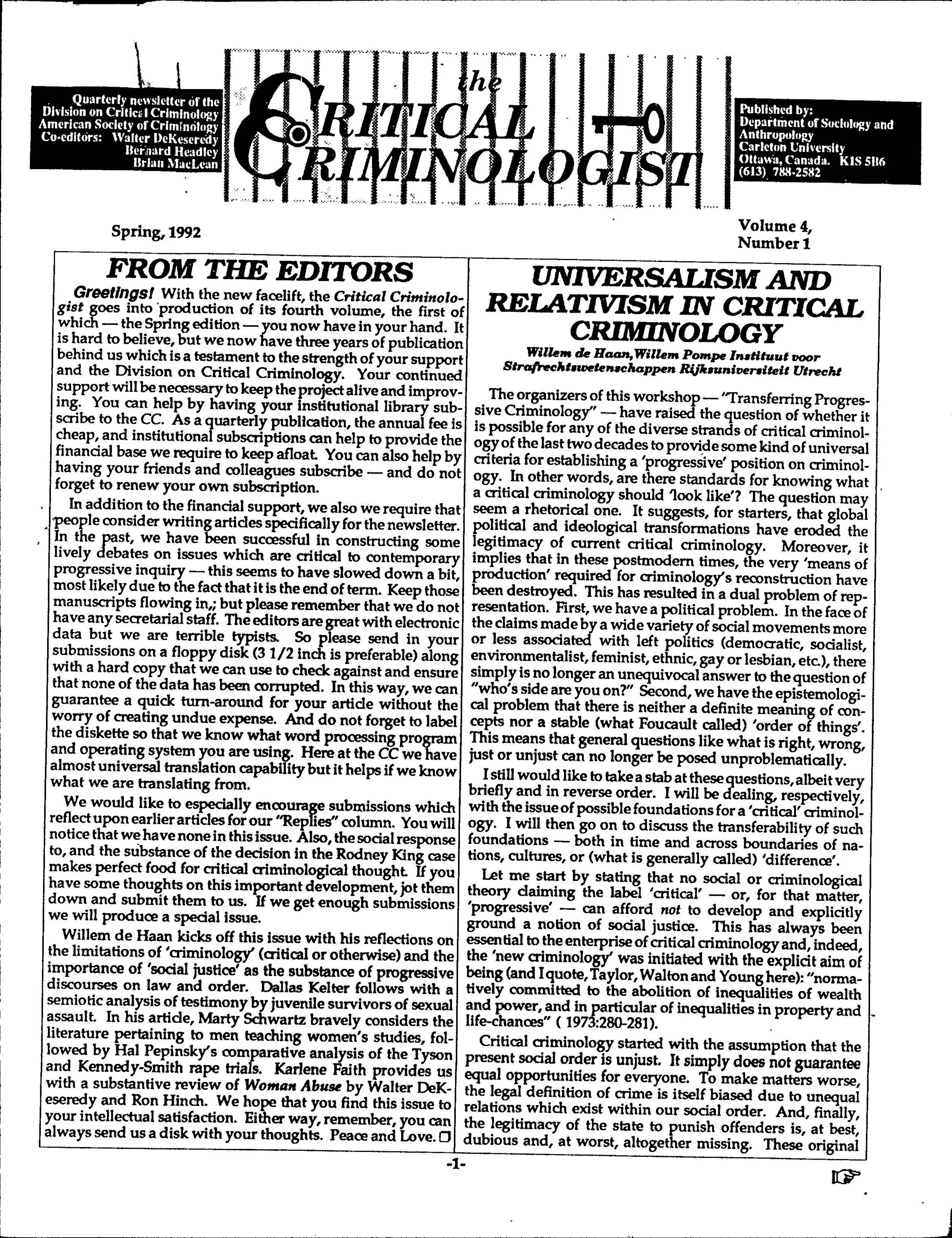
 Willem de Haan reflects on the limitations of criminology, critical and otherwise as well as the importance of “social justice” as the substance of progressive discourses on law and order. Dallas Kelter follows with a semiotic analysis of testimony

The Critical Criminologist Vol 4 No 1

The Critical Criminologist Vol 4 No 1

 Willem de Haan reflects on the limitations of criminology, critical and otherwise as well as the importance of “social justice” as the substance of progressive discourses on law and order. Dallas Kelter follows with a semiotic analysis of testimony

Willem de Haan reflects on the limitations of criminology, critical and otherwise as well as the importance of “social justice” as the substance of progressive discourses on law and order. Dallas Kelter follows with a semiotic analysis of testimony by juvenile survivors of sexual assault. Marty Schwartz considers the literature pertaining to men teaching women’s studies, followed by Hal Pepinsky’s comparative analysis of the Mike Tyson and Will Kennedy-Smith rape trials.

Click here for full issue