• The Team
  • The Other City: About
  • Behind Bars Blog
  • The Other City: Working Groups
    • About
    • Key Issues Blog
    • The Papers of Julia Schwendinger and Herman Schwendinger
    • A Note on the Berkeley School of Criminology
    • About the Schwendinger's: From 50 Key Thinkers in Critical Criminology
    • The Obituaries of Hi and Julia
    • Looking Back: Reflecting on The Birth of Radical Criminology at Berkeley
    • The Radical Caucus at the ASA
  • Critical Criminologist Archive
  • Publications
Menu

The Critical Social History Project

BMW, Suite 601
New York City
Phone Number

Your Custom Text Here

The Critical Social History Project

  • The Team
  • The Other City: About
  • Behind Bars Blog
  • The Other City: Working Groups
  • Preserving Justice
    • About
    • Key Issues Blog
  • The Papers of Julia Schwendinger and Herman Schwendinger
    • The Papers of Julia Schwendinger and Herman Schwendinger
    • A Note on the Berkeley School of Criminology
    • About the Schwendinger's: From 50 Key Thinkers in Critical Criminology
    • The Obituaries of Hi and Julia
    • Looking Back: Reflecting on The Birth of Radical Criminology at Berkeley
    • The Radical Caucus at the ASA
  • Critical Criminologist Archive
  • Publications
 This issue explores some new topics and includes new voices. Marlyce Nuzum, a graduate student at Eastern Michigan University, writes a concise and provocative article on the perils of privatization. Jeanne Flavin shares a short version of her ongoi

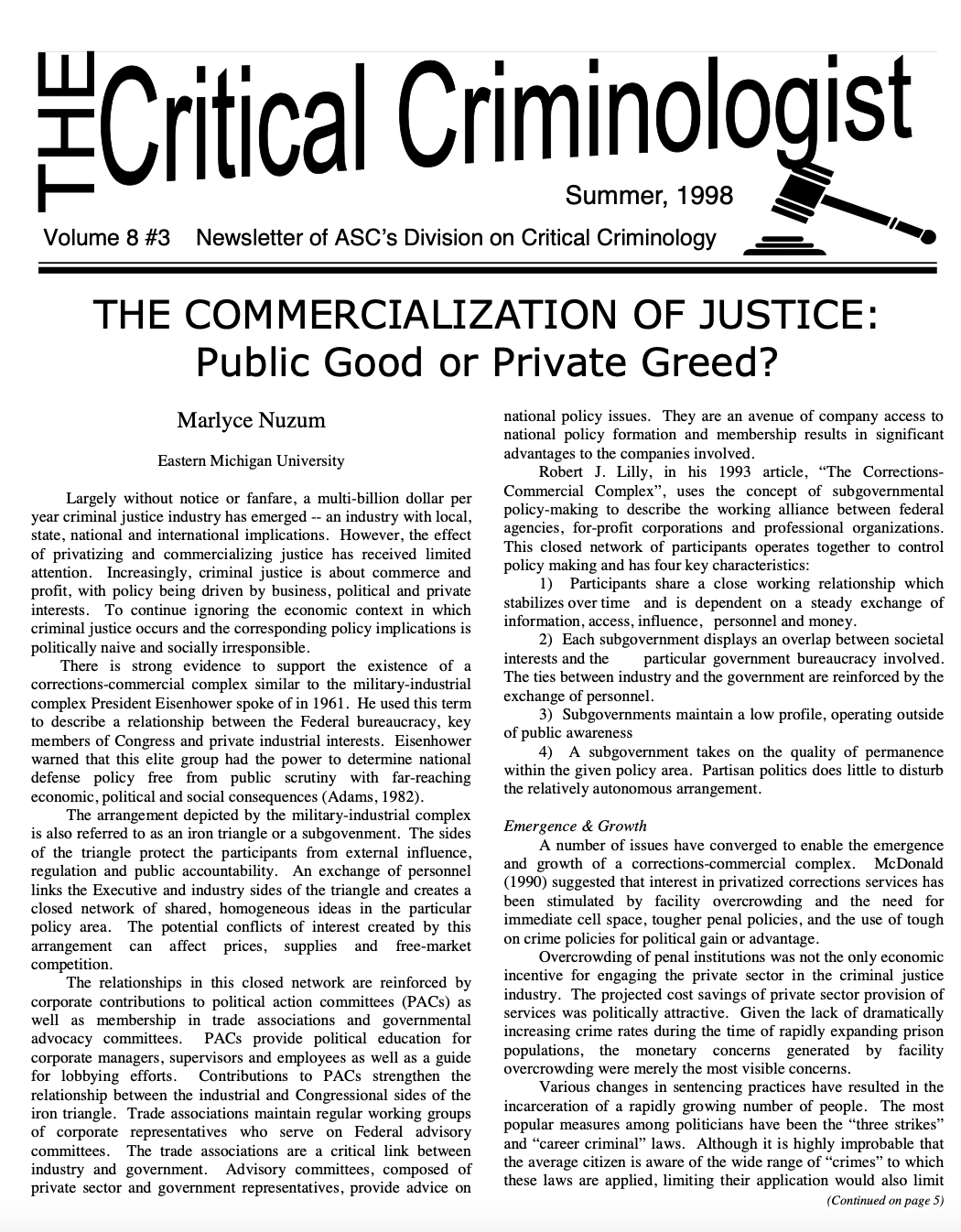
The Critical Criminologist Vol 8 No 3
The Critical Criminologist Vol 8 No 3

 This issue explores some new topics and includes new voices. Marlyce Nuzum, a graduate student at Eastern Michigan University, writes a concise and provocative article on the perils of privatization. Jeanne Flavin shares a short version of her ongoi

This issue explores some new topics and includes new voices. Marlyce Nuzum, a graduate student at Eastern Michigan University, writes a concise and provocative article on the perils of privatization. Jeanne Flavin shares a short version of her ongoing work on how to deliver humane treatment to people who are (or are suspected of being) HIV+ when the police and society in general have high levels of AIDS-phobia. George Rigakos and Matt Robinson remind readers what the ‘critical’ part of critical criminology is about. Rigakos starts to deconstruct the risk profiling and actuarialism that are part of ‘risk society’. Robinson uses the current controversy about the tobacco industry to highlight the wrongs they have done and remind criminologists not to limit their inquiry only into officially designated ‘crimes’.

Click here for full issue